
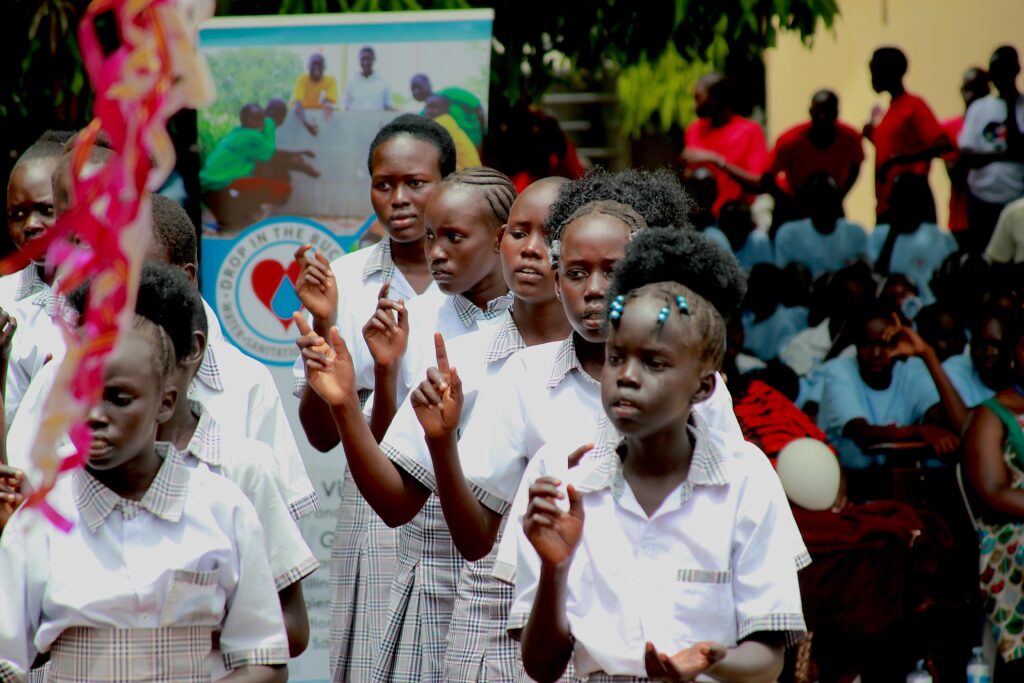
Before I started working in South Sudan, I don’t think I had ever paid much attention to International Day of the Girl. In the US, it’s not exactly a day that stops traffic.
On the streets of South Sudan, it actually does.
When the Girls Take Over the Road
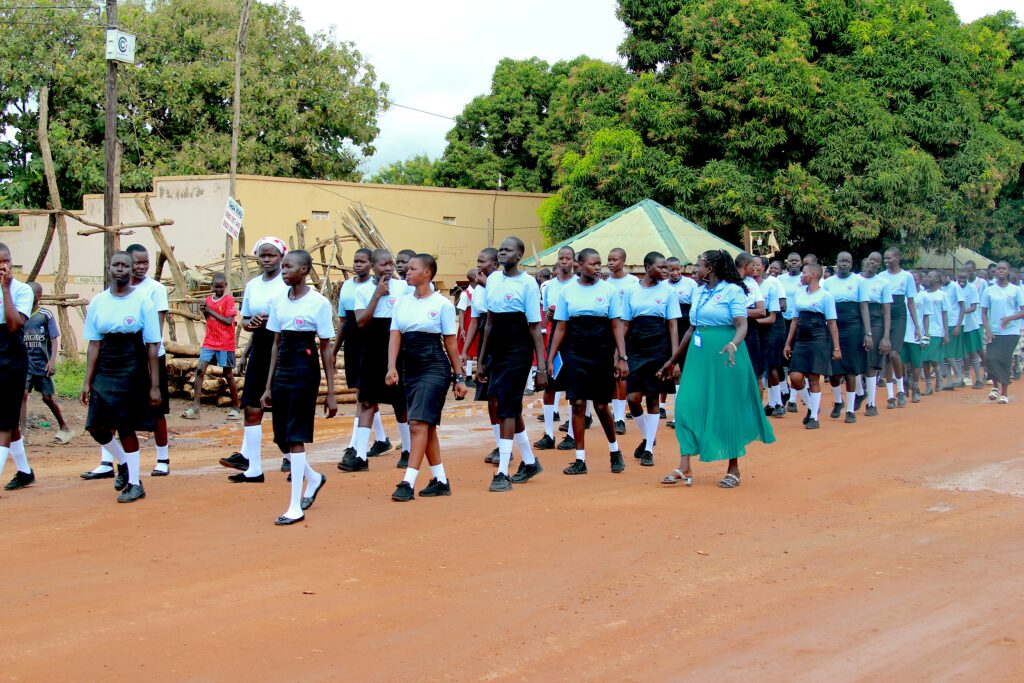
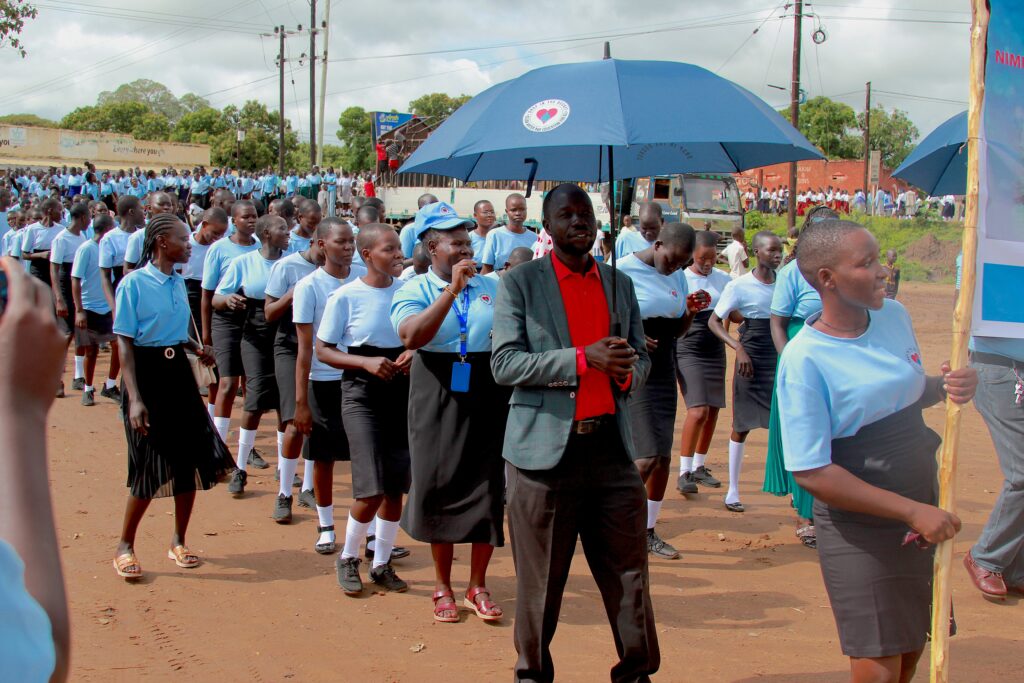
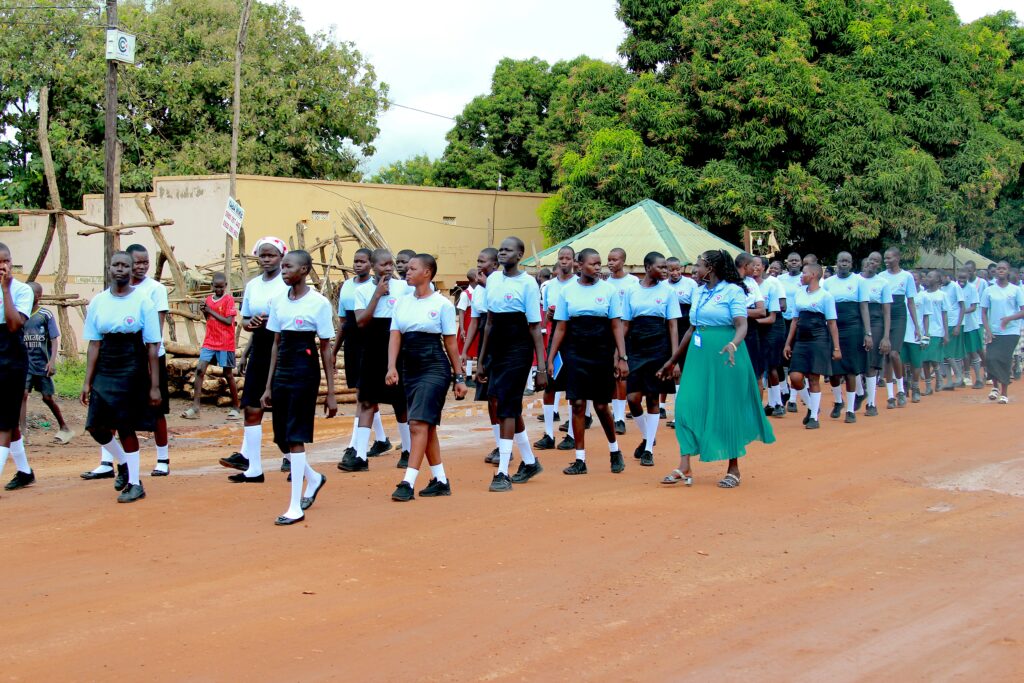
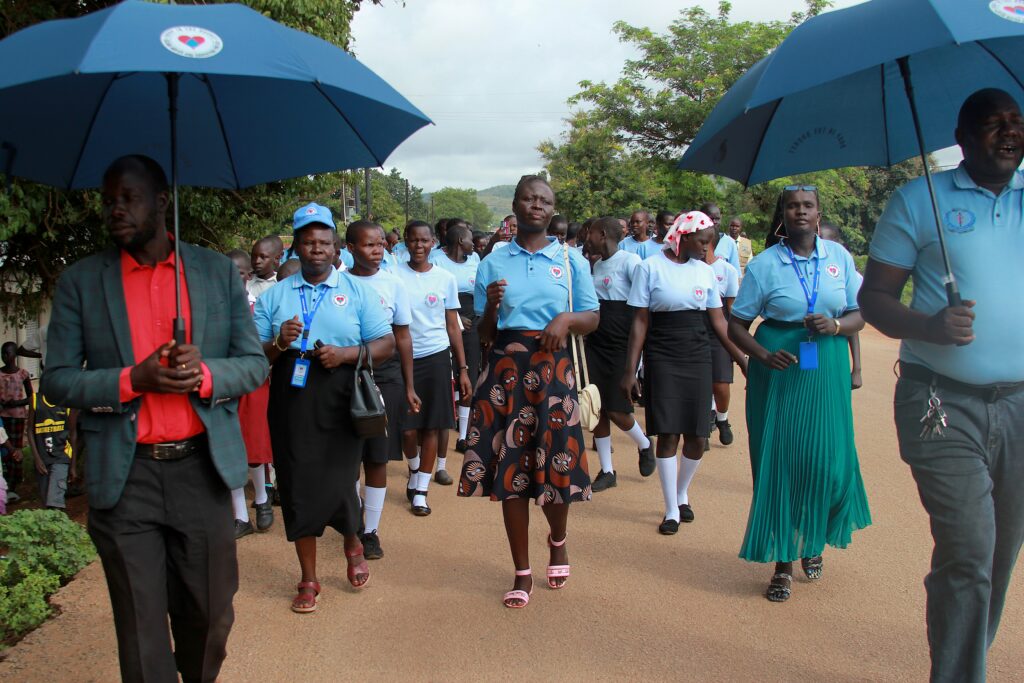
Every October, girls from schools across Nimule, where we operate, gather to celebrate International Day of the Girl. And the day begins with a parade. Nimule sits on the main road from the Ugandan border to the South Sudan capital, Juba. The road is used by every fully loaded truck and vehicle traveling north. For the parade, the police stop traffic and the girls take over the road.
Students from different schools march through town carrying banners, many wearing DROP shirts or their school uniforms. There is singing and plenty of noise, and people along the road stop to watch. I’ve always loved the sight of all these girls walking right down the middle of one of the busiest roads in South Sudan, proudly announcing that this particular day belongs to them.
After years of working in South Sudan, I’ve come to appreciate this day more than I ever expected. We spend so much of our time working on the practical things that help girls stay in school, from scholarships and after-school programs to menstrual health and support for their families. Those things matter enormously. But it’s also important to stop and celebrate the girls themselves, and to give them a day when their achievements, their voices and their futures are the focus.
The need for that celebration is hard to overstate. In South Sudan, only about 29% of women are literate, and millions of school-age children are out of school. Globally, an estimated 133 million girls are out of school as well. Behind those numbers are girls whose opportunities are limited before they’ve had much chance to decide what they want their lives to look like.
South Sudan has faced enormous challenges since becoming the world’s youngest country in 2011. Conflict and economic hardship have made life difficult for families across the country, and the war in neighboring Sudan has brought hundreds of thousands of refugees and returning South Sudanese across the border. The needs are immense, and the future can feel uncertain. That’s another reason I think a day like this matters. For a few hours, the focus shifts from everything the country is struggling with to what is still possible, and to the girls whose futures are worth fighting for.
Speeches, Songs and Celebrations
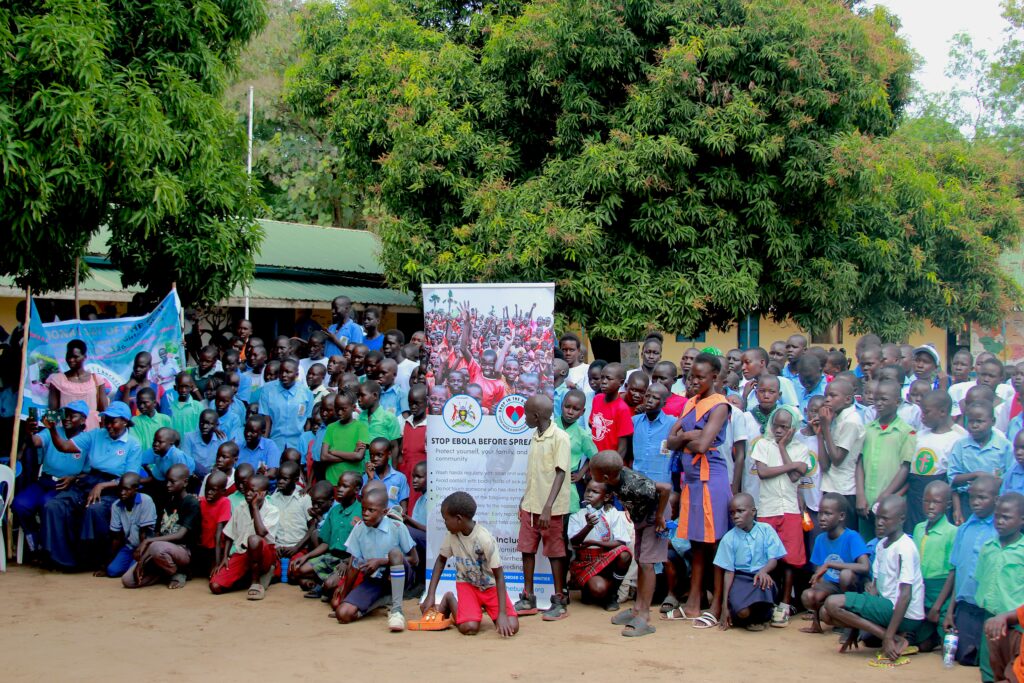
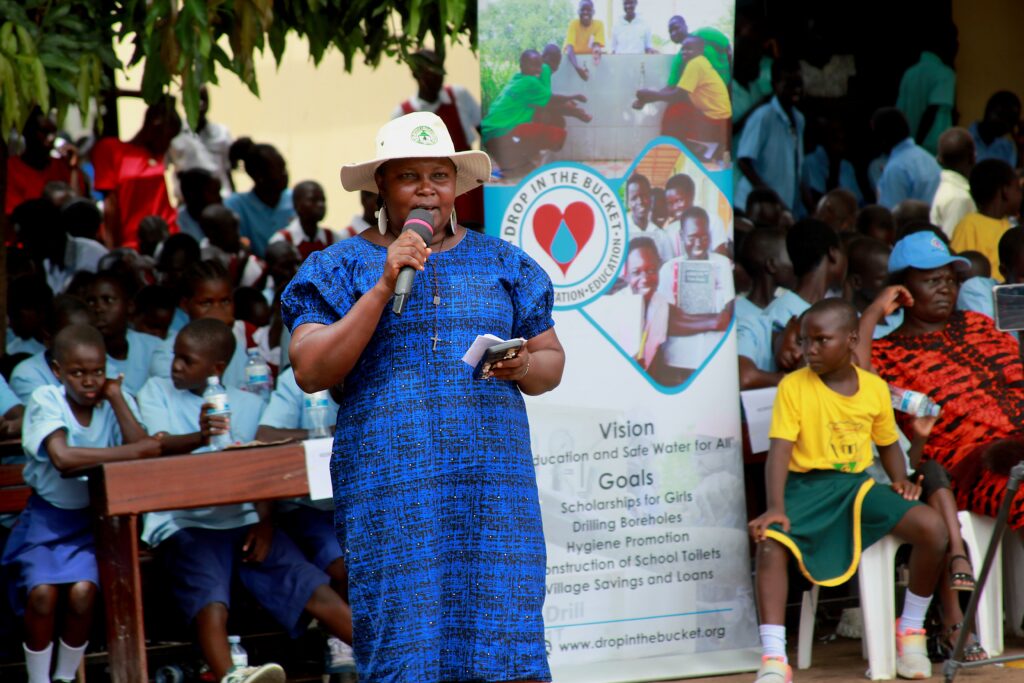
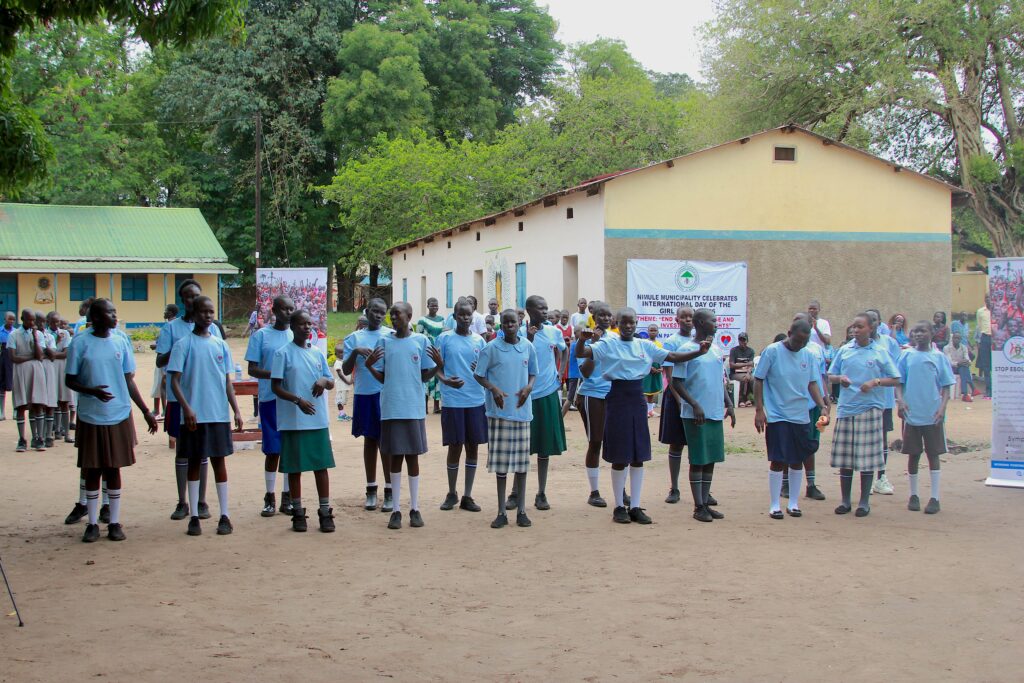
After the parade, everyone eventually arrives at one of the schools, where tents have been set up to provide some relief from the sun. We hand out water and packets of cookies, and then the speeches and performances begin. Education officials and community leaders speak. Prominent women from the community talk to the girls about education and their futures. Parents sometimes speak too. Then the students take over.
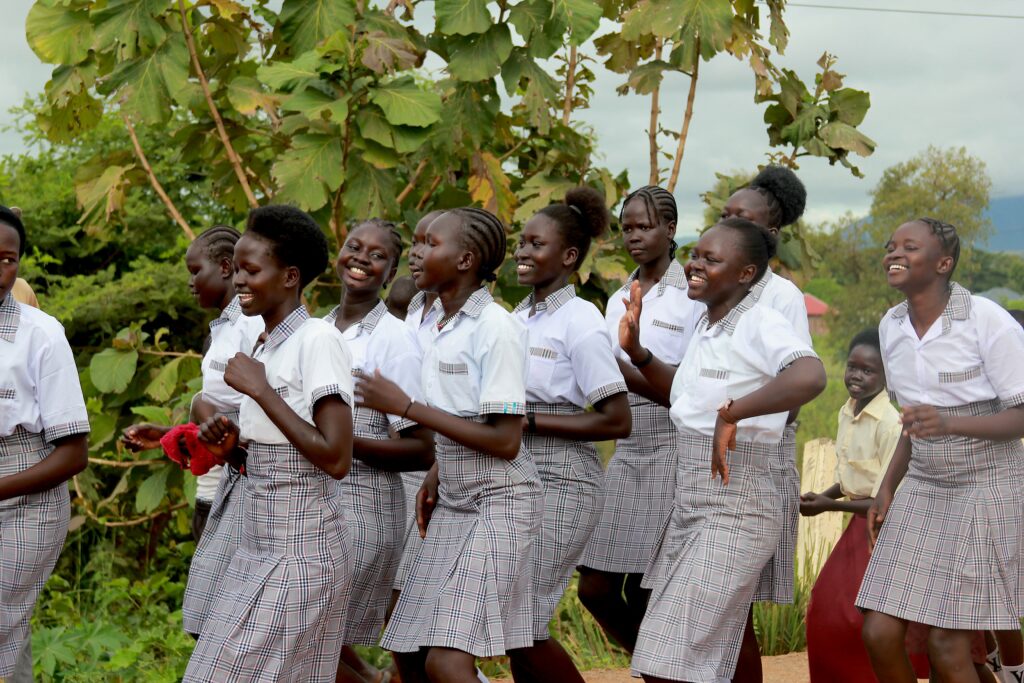
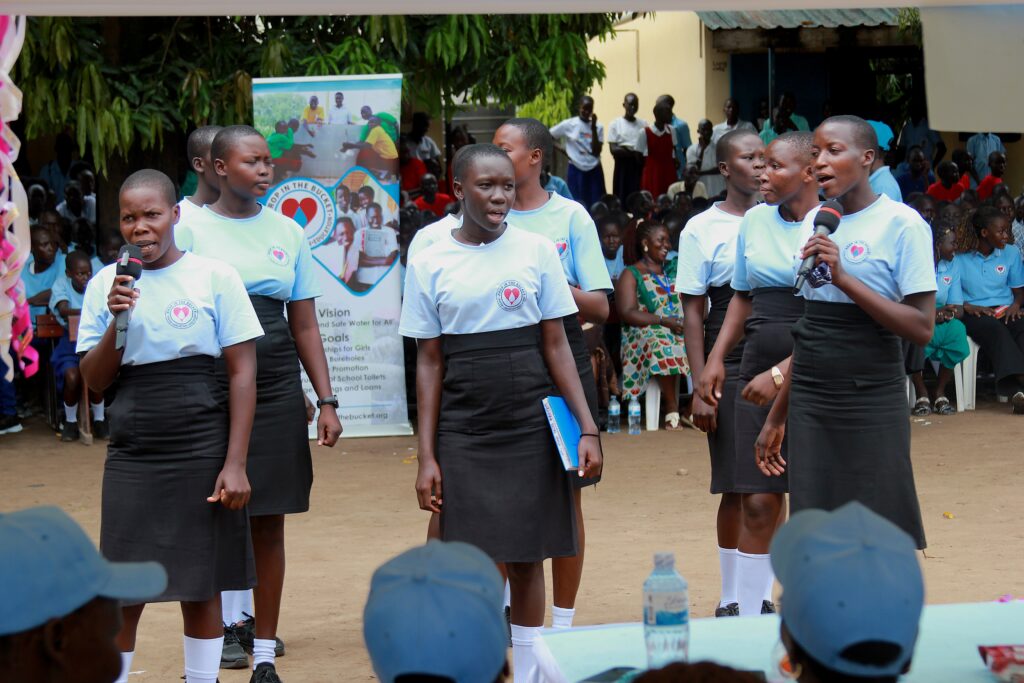
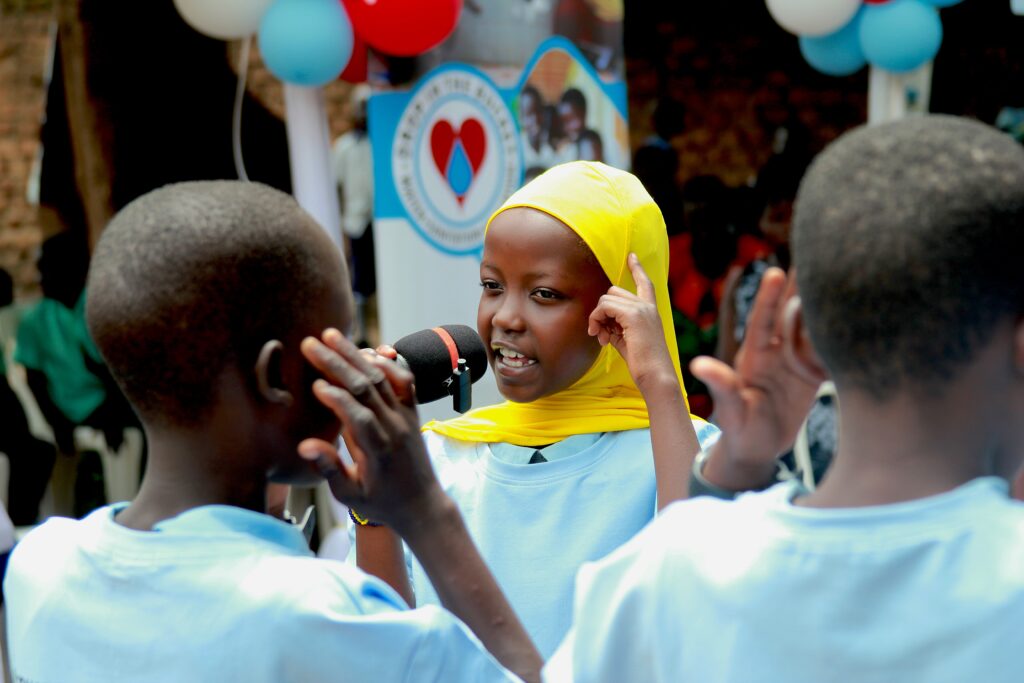
Different schools prepare different things. There are poems, songs and dramas about staying in school, early marriage and some of the other issues girls are dealing with. There are traditional dances from different tribes, with drums and singing, and girls get up in front of a very large crowd to perform and speak.
It’s a lively day, and there is a lot of laughter, cheering and applause. But underneath all the celebration is something important. The girls are being reminded that their education matters, that their futures matter, and that their community has a role to play in making those futures possible.
Finding Their Voices
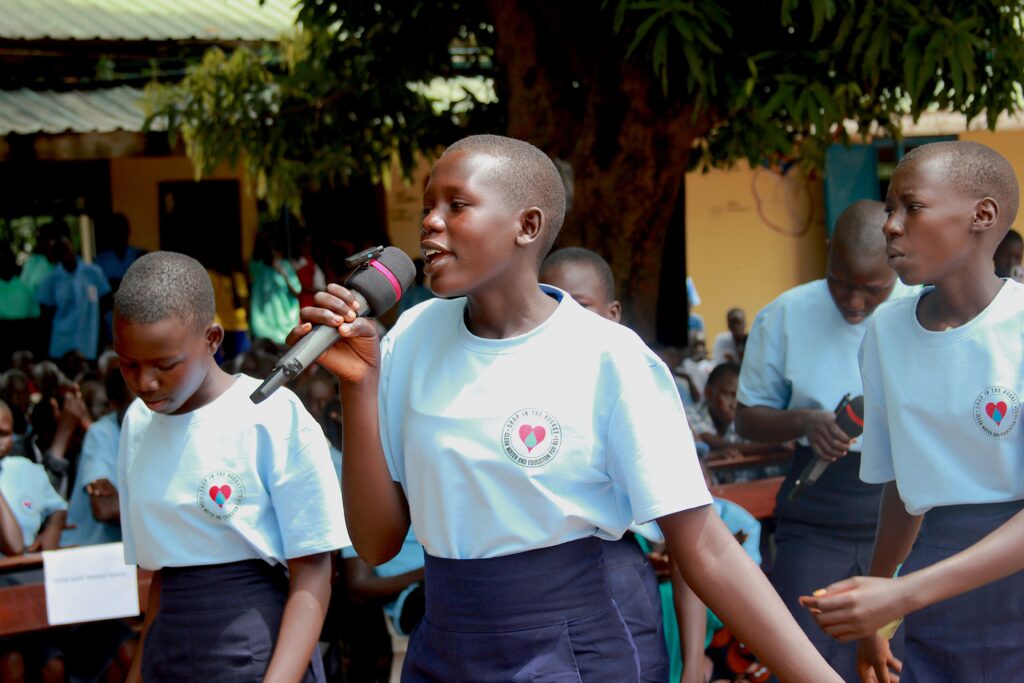
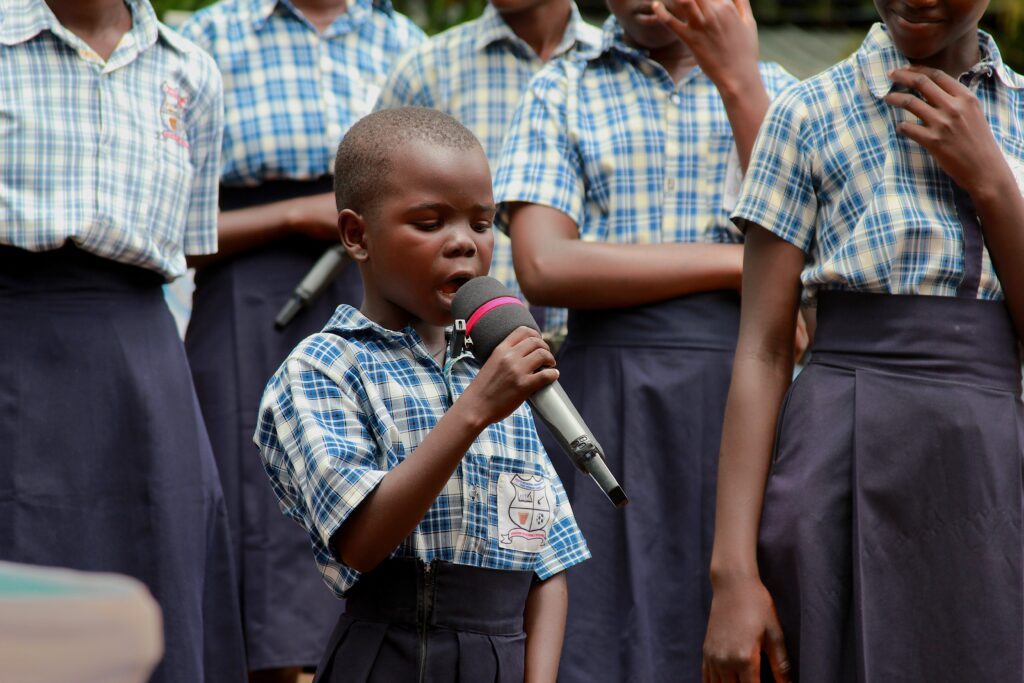
One thing that has always impressed me about South Sudanese girls is how good they can be at public speaking. A girl can seem incredibly shy when you’re talking to her, and then someone hands her a microphone and suddenly she’s commanding an audience. I’ve watched this happen over and over again, and our donors who have visited have noticed it too.
I’m not someone who has ever particularly loved public speaking myself, so maybe that’s part of why I’m so impressed by it. These girls can really speak.
For a few minutes, everyone is listening to them. And in a country where girls still face so many barriers to education, that matters.
I also think there is something hopeful about watching a girl stand in front of a crowd and speak with confidence. Education is about learning to read, write and do mathematics, of course, but it is also about developing the confidence to express an opinion, ask questions and imagine a future beyond the circumstances you were born into. When girls have the opportunity to learn and the encouragement to use their voices, you begin to see what becomes possible.
DROP’s Growing Role in the Celebration
For years, DROP was one of several organizations helping support International Day of the Girl in Nimule. But as conflicts and emergencies in other parts of the world have pulled organizations and funding away from South Sudan, there are fewer development organizations working in our area. Gradually, we’ve found ourselves taking more of the lead in organizing the day.
That’s been an interesting thing for me to realize. I’ve always thought of DROP as a relatively small organization. I put my head down and focused on the work, and somewhere along the way I looked up and realized that we’re now one of the organizations the community comes to when something like this needs to happen.
It makes me proud, not just because of the role DROP now plays, but because it means this celebration continues to happen and the girls continue to have a day that belongs to them. When you work in development, progress can be difficult to measure. Some days it feels as though there is an endless list of problems to solve. Then you step back and realize that something you helped build has become part of the community itself. That feels significant.
Keeping Girls at the Center
Keeping girls in school requires more than telling them that education is important. Parents have to believe in it. Teachers, chiefs, government officials and the larger community have to support it too. International Day of the Girl brings all of those people together in one place, with the girls at the center.
I think that is what makes the day worth celebrating. We cannot solve every problem in an afternoon, and a parade won’t change the realities many girls face when they return home or go back to school the next day. But it gives the girls a day to be seen for what they are, not just the challenges they face, but the possibilities ahead of them.
For one afternoon, the girls aren’t being talked about as statistics or as a problem somebody needs to solve. They’re marching through town, dancing, reciting poems, making speeches and telling everyone else what they think.
And traffic can wait.

Stacey Travis
Drop in the Bucket