
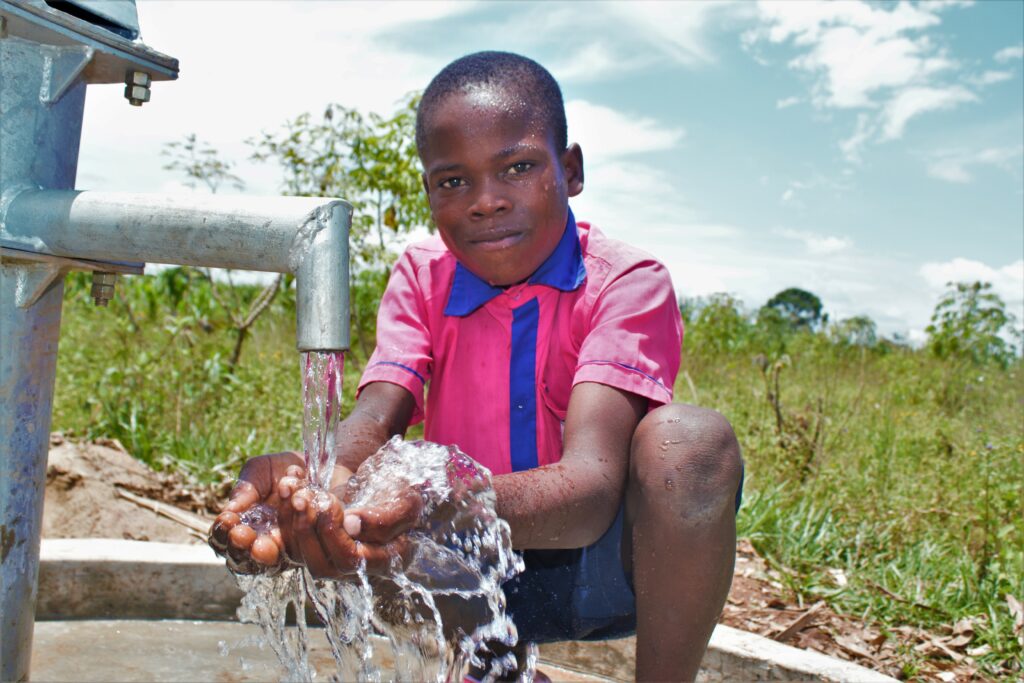
Bulumwaki Primary School: How Clean Water Can Affect Children’s Education
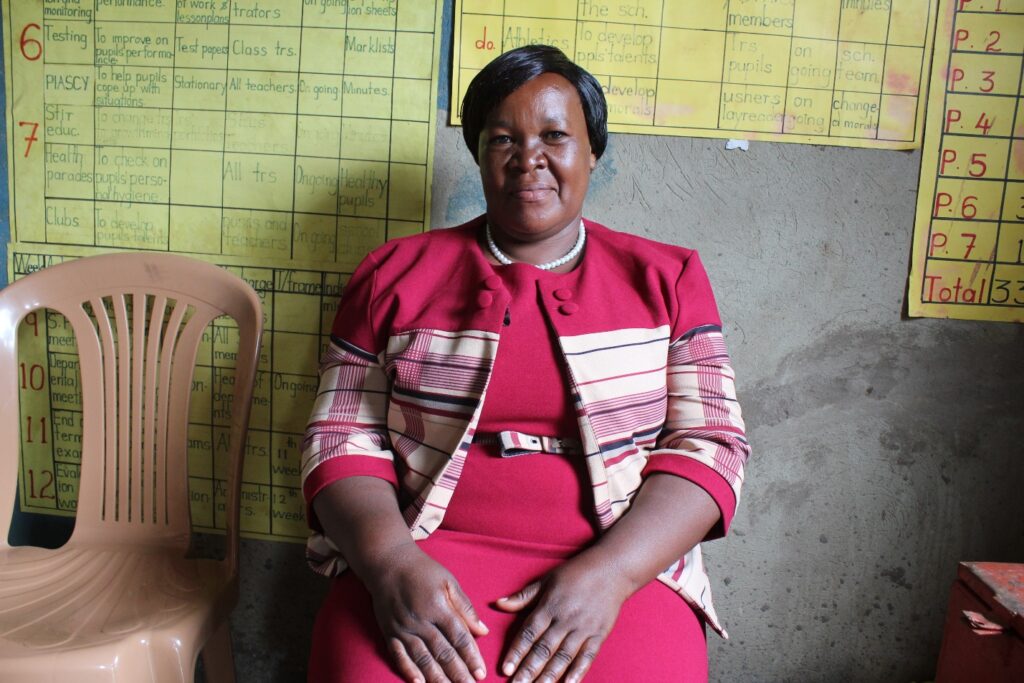
It was January 2022 and the Bulumwaki primary school was struggling. The new year had brought 836 pupils to the school but there was no clean water. “We really needed a borehole (well) but we did not have the resources to get one drilled and we had no way to raise that kind of money” recalls Namutubu Oliver, the school’s head teacher.
Just a 10 min walk from the school was a community well that they could use. Most days this was not too big a problem. It did take 20 mins to get there and back which meant missing half a lesson. But there were days when the lines at the well were long, and on those days, the children would take an hour or more to get water.
The Shadoof
The second option was a hand-dug waterhole locally known as a ‘shadoof’. The water from the shadoof was neither clean nor safe to drink, but on days when the lines at the well were long, the shadoof was the only option.
Mukiisa Priscilla is a student at Bulumwaki. She hated missing lessons and would get frustrated standing on line at the community well. “In the mornings the school would tell us we needed to go and fetch water. They asked us because we were older and stronger than the little children, but we did not want to miss school.” For Mukiisa the new well meant that students no longer have to walk for water. “The most frustrating situation was when we were studying for our final exams and they would make us stop to fetch water”.
The headteacher knew she was in a tough position. The last year of primary school is when the students’ exam results matter the most, so while she hated sending them, she had no choice. The younger children were not as strong or able to walk as fast so it took them longer and they missed more school. She is relieved she no longer has to make such difficult choices.
The shadoof had its own set of problems! Every dry season it would stop producing water. It was also impossible to keep livestock out, so it was always polluted with animal waste.
Before the well at Bulumwaki
Oliver’s voice gets quiet as she remembers how things were “There were times, when the children were sick with the flu or had colds and needed water for their dry throats or to wash their faces and hands. I had to tell them to wait until break or lunch time when we could get more water”.
“Things were much worse for girls during their menstrual cycle. We have a changing room for girls, but without water it was not much use. Some menstruating girls had to just sit and wait until we could go and fetch water. The resulted in poor hygiene, embarrassment and missing lessons” remembers the head teacher.
In smaller schools, teachers and students end up using the same toilets. With toilets being used by so many students and no water to keep them clean, the teachers’ frustration was understandable. And no water for washing hands after using the toilets opened the school up to even more health risks.
To read more about this school click here