WHY WATER & EDUCATION
Clean Water Changes Lives. Education Changes Everything
Clean water saves lives. But real change happens when children are healthy enough to stay in school and complete their education. Education creates opportunity, strengthens communities, and allows families to move beyond poverty. Across East Africa, education can change the course of an entire community.
WHY CLEAN WATER MATTERS
Clean Water Keeps Children in School
The high cost of unsafe water
In many rural communities across East Africa, children spend hours each day collecting water instead of attending class.
The burden of fetching water disproportionately falls in the girls who are often expected to fetch water for their families before or after school, while older students may be asked by their teachers to fetch water during the school day—forcing them to miss vital time in class.
When clean water is available directly at a school, attendance often rises dramatically. Students spend more time in the classroom and schools become healthier, safer places to learn. In many cases, Drop in the Bucket has witnessed school enrollment double—or even triple—after drilling a well at a school.
The burden of fetching water disproportionately falls in the girls who are often expected to fetch water for their families before or after school, while older students may be asked by their teachers to fetch water during the school day—forcing them to miss vital time in class.
When clean water is available directly at a school, attendance often rises dramatically. Students spend more time in the classroom and schools become healthier, safer places to learn. In many cases, Drop in the Bucket has witnessed school enrollment double—or even triple—after drilling a well at a school.
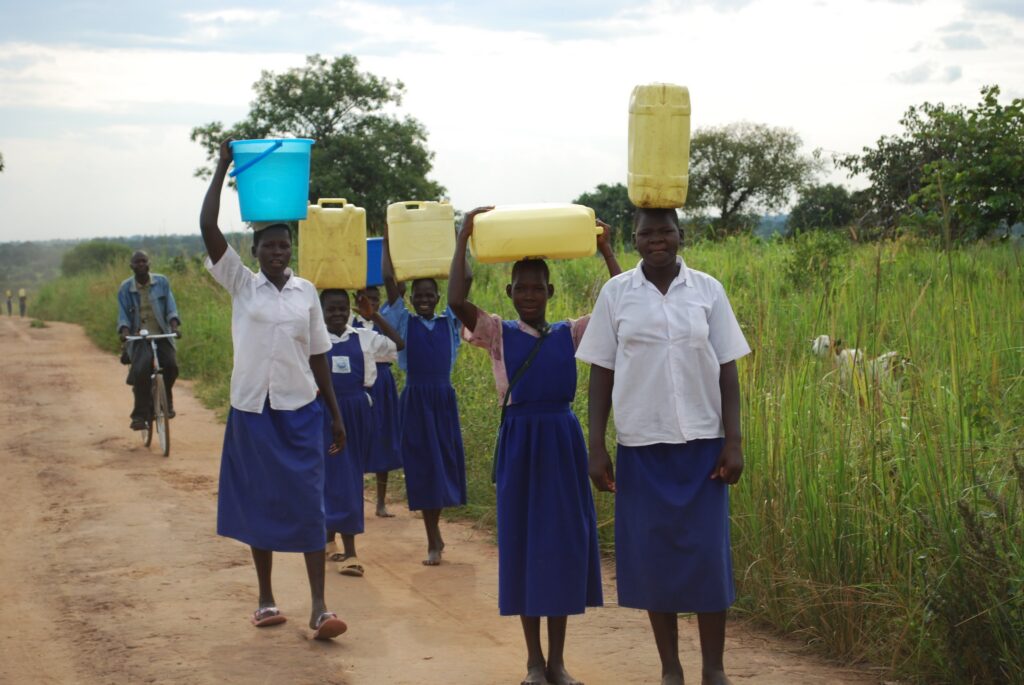
“In the mornings the school would tell us we needed to go and fetch water. They asked us because we were older and stronger than the little children, but we did not want to miss school. The most frustrating situation was when we were studying for our final exams and they would make us stop to fetch water.”
— Priscilla, student at Bulumwaki Primary School, Uganda
HEALTH & EDUCATION
Clean Water Means Healthier Schools
Fewer Days Sick.
More Days in Class
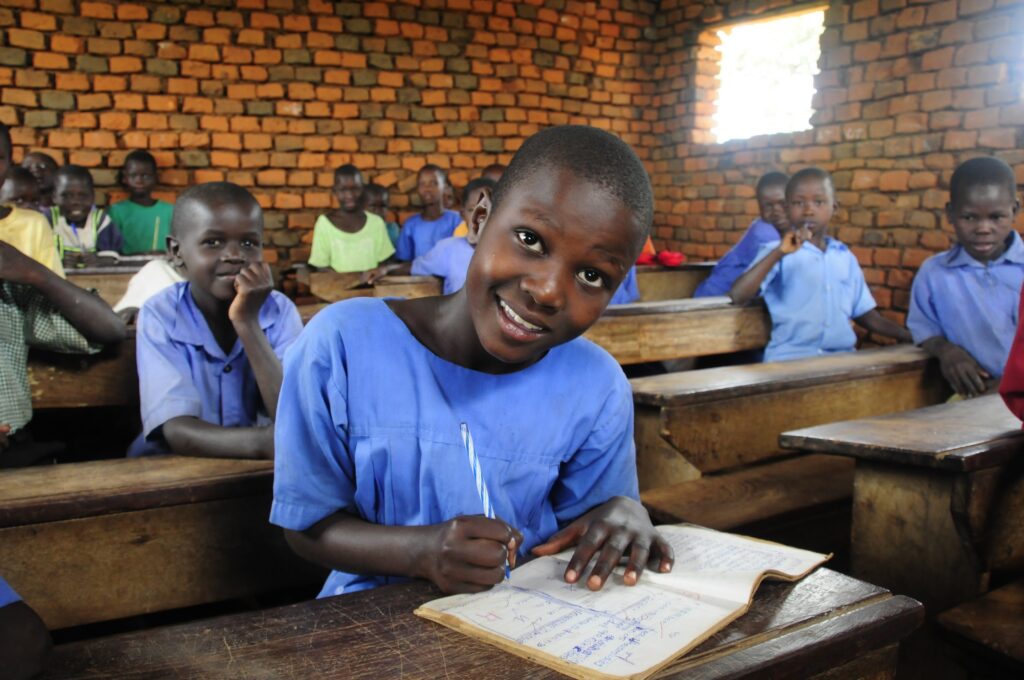
Waterborne diseases like diarrhea, typhoid, and intestinal worms are a major reason children miss school.
When students are sick, they fall behind. When illness spreads through a school, everyone loses valuable classroom time. Clean water, school toilets, handwashing stations, and hygiene education all work together. They help reduce preventable illness and make schools healthier places to learn.
When children are healthy, hydrated, and present, they are better able to focus, participate, and succeed.
When students are sick, they fall behind. When illness spreads through a school, everyone loses valuable classroom time. Clean water, school toilets, handwashing stations, and hygiene education all work together. They help reduce preventable illness and make schools healthier places to learn.
When children are healthy, hydrated, and present, they are better able to focus, participate, and succeed.
WATER AND GENDER
Keeping girls in School
The world water crisis has a gender bias! All across sub-Saharan Africa, it is girls that are often the ones tasked with fetching water for their families. The time this takes each day often forces girls to miss school.
Many girls miss classes because they lack access to menstrual hygiene supplies or private sanitation facilities. Over time, repeated absences increase the likelihood that girls will fall behind academically or leave school altogether.
Drop in the Bucket addresses these challenges through a combination of clean water access, school sanitation, menstrual hygiene support, Safe Spaces programs, and scholarships for girls at risk of dropping out.
By helping girls stay in school, communities become healthier, more stable, and better equipped to build long-term economic opportunity.
Many girls miss classes because they lack access to menstrual hygiene supplies or private sanitation facilities. Over time, repeated absences increase the likelihood that girls will fall behind academically or leave school altogether.
Drop in the Bucket addresses these challenges through a combination of clean water access, school sanitation, menstrual hygiene support, Safe Spaces programs, and scholarships for girls at risk of dropping out.
By helping girls stay in school, communities become healthier, more stable, and better equipped to build long-term economic opportunity.